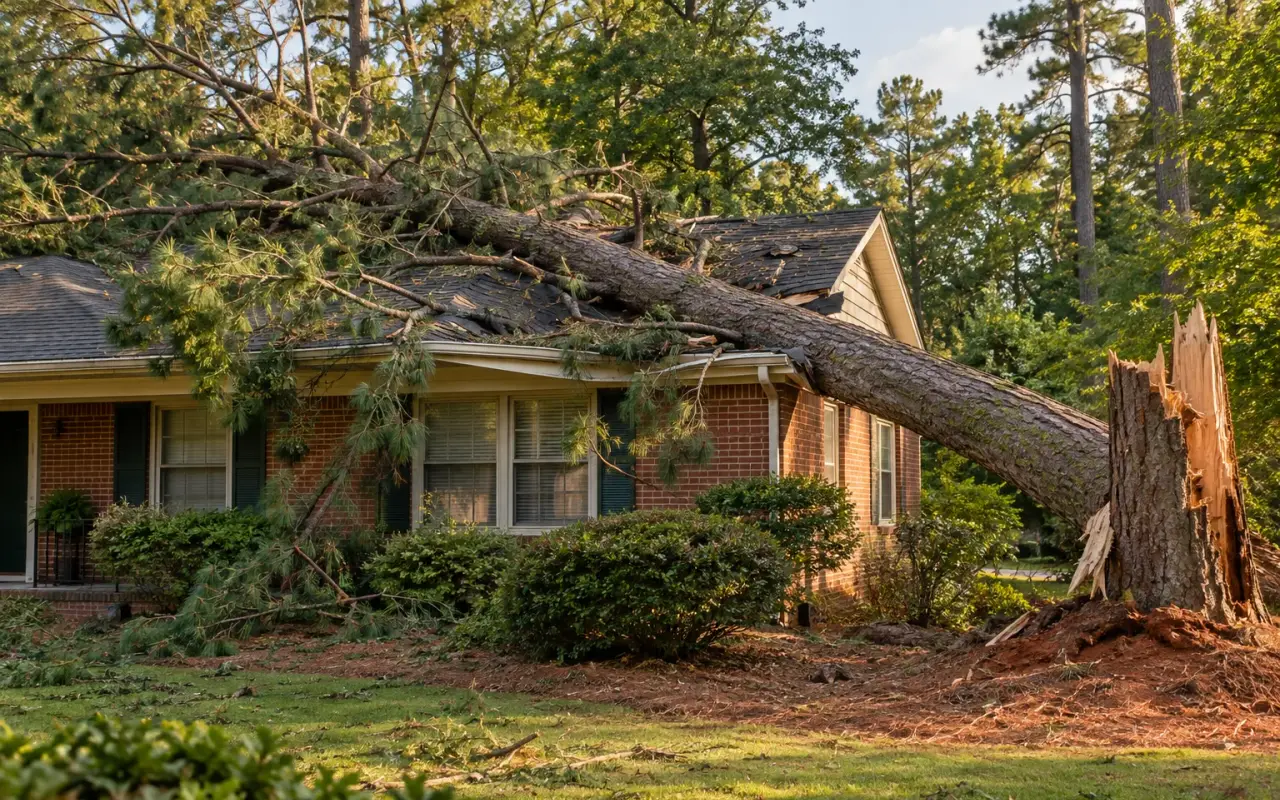
In the first hour
- People first. Move everyone out of the rooms under the tree and the rooms next to them. A trunk resting on a roof can shift as rafters give way or as rain adds weight to the leaves.
- Wires. If a line is on the ground, on the tree or on the house, treat it as live. Georgia Power takes reports of downed lines at 1-888-891-0938 and says you can also call 911 to have the line blocked off. If your bill comes from an EMC such as Cobb, Jackson, Sawnee or GreyStone, call the number on that bill instead.
- Gas. If you smell gas, leave the house and call the gas company from outside.
- Photos. Before anything is cut or moved, photograph the tree, the roof, the ceilings and walls inside, and anything the tree crushed. Keep the time stamps.
What the insurer will want
Georgia’s insurance regulator, the Office of Commissioner of Insurance, tells homeowners to report a claim promptly, to make reasonable repairs that keep further damage out (a tarp over an opening), and to keep receipts for labor and materials. It also says not to throw out damaged property before the adjuster has seen it.
On the tree itself, the regulator’s guide explains that the standard policy pays for removing a tree blown down by wind when the tree damaged the house or another covered structure, under the debris removal section, up to a limit the guide gives as $500. Policies differ, and removal of a tree from a building is sometimes treated separately from hauling it away, so read your declarations page and ask the adjuster which part of the bill each limit covers. More in Who pays when a tree falls.
The permit question
A tree that has already fallen is not a permit question in Atlanta: the city’s own guidance says no permit is needed to remove a fallen tree, though it suggests photographing it. A tree that is still standing but split or leaning hard after the storm is different; see Permits.
Getting it off the roof
Lifting a trunk off a house is rigging work: the crew cuts the tree in sections from the top down and lowers or lifts each one so nothing drops onto the roof. On big trees that means a crane or a bucket truck in the driveway or on the street. OSHA’s guidance for this work is to treat every line as energized and to leave anything within ten feet of a power line to trained line-clearance trimmers, which is why the utility comes first when wires are involved.
Do not go onto the roof, and do not start cutting the tree yourself where it rests on the house: a cut can release stored tension in the wood and drop the trunk further into the structure.
When you call
Have the answers to the questions with this page ready: they decide whether a climber, a bucket truck or a crane comes out.
Checked against the sources below on 2026-10-11.