Structures, not just the house
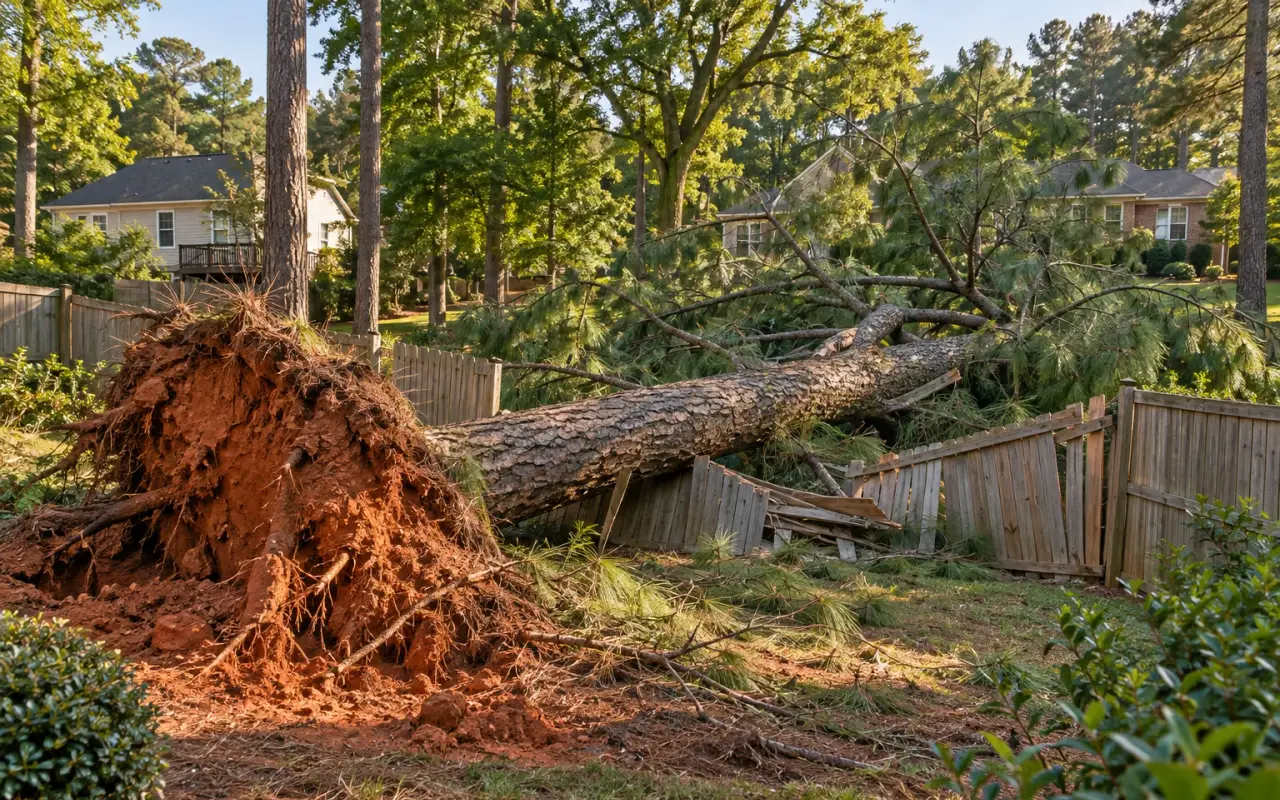
Homeowners policies cover the house and, separately, other structures on the lot: fences, sheds, detached garages, gazebos. Georgia’s insurance regulator explains that the standard policy pays to remove trees felled by wind when they damage the house or other structures, up to the debris removal limit in the policy, and pays nothing to remove a tree that damaged nothing covered. A tree that took out a section of fence has damaged a structure; a tree that landed on the lawn beside the fence has not.
Two practical results:
- The fence or shed repair is part of the claim, subject to your deductible. If the repair costs less than the deductible, a claim gains nothing.
- The tree’s removal falls under the debris limit, which in the regulator’s guide is $500. Large oaks and pines cost more than that to cut up and haul, so expect to pay part of it.
Whose tree was it
The trunk decides ownership: the University of Georgia Extension puts it simply, the tree belongs to the property its trunk stands on, and a trunk on the line is owned jointly. Fault is a separate question. In Georgia, the owner is liable for damage from a falling tree only when they knew, or reasonably should have known, that it was diseased, decayed or dangerous; the extension adds that this knowledge is usually shown in writing, such as an arborist’s report or a neighbor’s letter about the tree before it fell.
If you had warned the neighbor in writing about a dead pine that then fell on your shed, give that letter to your insurer. Otherwise, a storm-felled healthy tree is usually treated as nobody’s fault, and each side claims on its own policy. See The neighbor’s tree.
Cleanup
Fence lines are tight work: the tree often lies across both yards, over a fence still partly standing, sometimes against a shed full of things you want back. Say on the call which yards the crew needs to enter; if it is the neighbor’s yard too, ask them before the crew arrives.
Checked against the sources below on 2026-10-11.